Does Putting Bread in the Fridge Make It Last Longer? Or Is This Just Another Myth

You bought a fresh loaf of bread, ate a few slices, and put the rest in the refrigerator. The logic seems reasonable. Milk and many other foods last longer in the cold, so bread should benefit too. Yet by the next morning, you might notice that the bread feels firmer, even though there is no sign of mold.
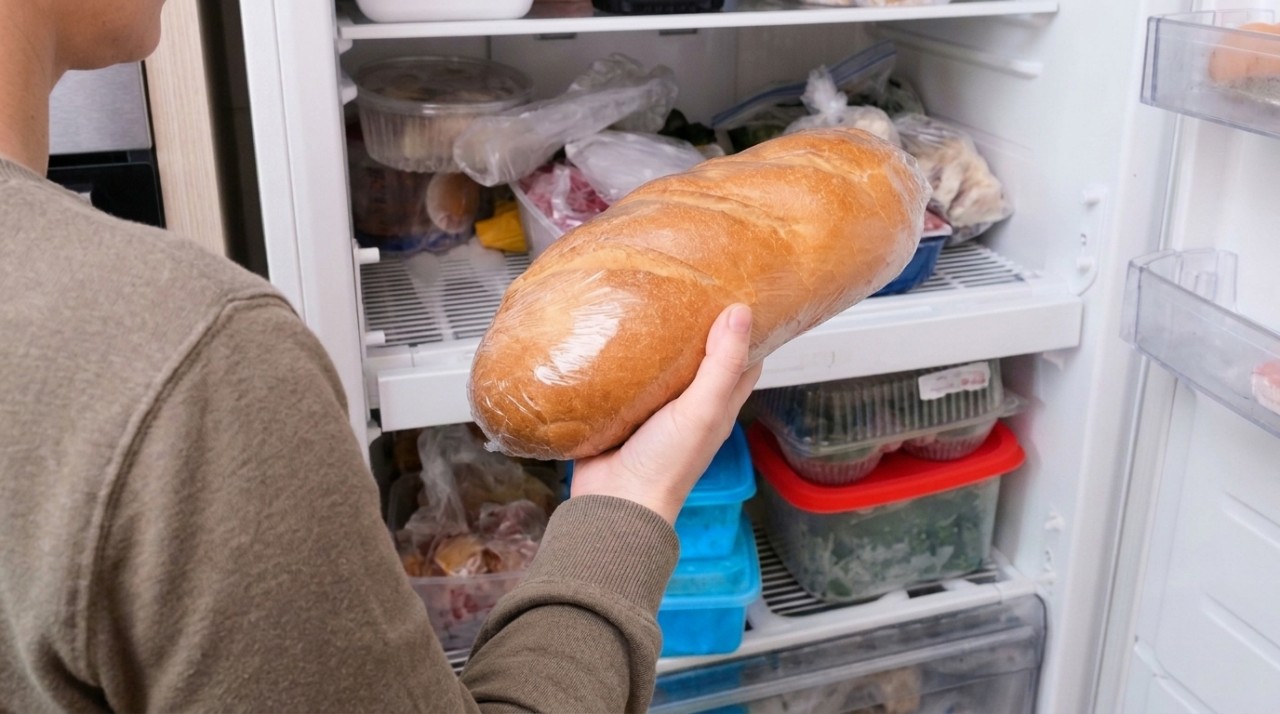
Bread can stay mold-free longer in the fridge, but it loses its softness faster. Cold temperatures slow mold growth, yet they also accelerate changes in starch that make bread stale. Room temperature is usually better for everyday storage, and the freezer is the better choice for several weeks.
Interestingly, both sides of the argument have a scientific basis. The answer depends on how long you plan to keep your bread and what you consider fresh.
In this article
Why Does Bread Get Stale Faster in the Fridge?
During the breadmaking process, starch in flour absorbs water and changes its structure as the dough heats up. The process helps create the soft texture inside a loaf. Once bread cools, starch molecules gradually reorganize into a more ordered structure.
Scientists call the process starch retrogradation, and it is one of the main reasons bread becomes stale. Moisture loss also affects texture, but bread can become firm even inside a well-sealed package.
Refrigerator temperatures are particularly favorable for starch retrogradation. In a 2011 study, researchers compared bread stored at 77°F (25°C), 39°F (4°C), and 0°F (minus 18°C). Retrogradation occurred fastest at 39°F, whereas the changes were much slower at freezer temperatures.
Researchers at KU Leuven in Belgium found similar results. Bread stored at 39°F showed faster starch changes and a greater increase in crumb firmness than bread kept at 77°F.
A slice straight out of the fridge can therefore feel older than one left on the kitchen counter for the same amount of time.
How Much Longer Does Refrigerated Bread Actually Last?
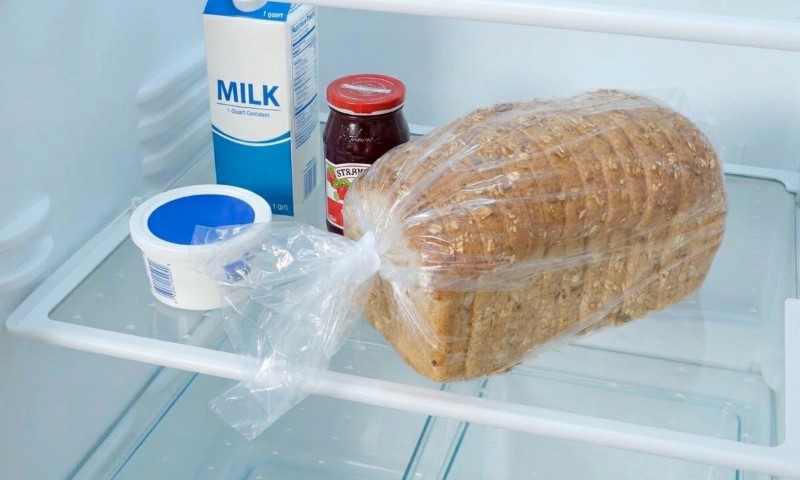
The important distinction is between freshness and resistance to spoilage.
The U.S. Department of Agriculture estimates that commercially produced bread generally lasts two to four days at room temperature, compared with seven to fourteen days in the refrigerator.
Actual shelf life depends on the recipe and storage conditions. Commercial bread with preservatives often lasts longer than a fresh loaf from a small bakery.
In a warm, humid kitchen, mold may appear sooner. Refrigeration can help under such conditions, especially if freezer space is limited. The trade-off is a firmer texture.
A best-by date primarily indicates expected product quality. Bread with visible mold should be discarded regardless of the date printed on its package.
The Best Storage Method Depends on the Bread
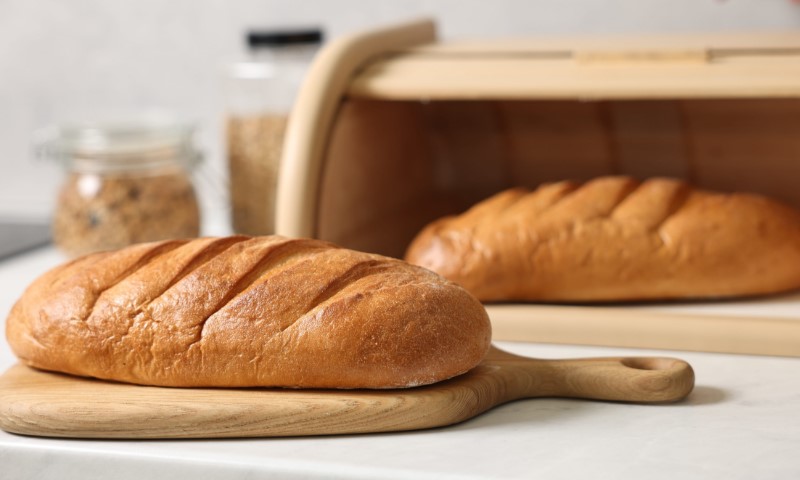
A crusty artisan loaf and soft commercial sandwich bread need different storage conditions.
For fresh bread with a firm crust, a paper bag often does a better job of preserving the desired texture. Plastic traps moisture, which can soften the crust. Sophia Handschuh, co-founder of London’s Sourdough Sophia bakery, recommends a paper bag at room temperature for such loaves in an October 2026 Guardian article.
Soft, sliced sandwich bread generally keeps better in its original, tightly sealed package, as directed by the manufacturer.
If you make bread at home, let the loaf cool completely before you put it away. Condensation inside a bag creates damp conditions that favor mold.
Can You Make Stale Bread Soft Again?
View this post on Instagram
If starch retrogradation has made your bread firm, heat can temporarily improve its texture.
As bread heats up, part of the crystalline starch structure changes, which makes the crumb softer again. A brief period in the oven or toaster can therefore improve bread that has lost its freshness.
The effect is temporary. Once the bread cools, it gradually becomes firm again.
There is an important difference between stale bread and moldy bread. The USDA recommends discarding moldy bread because fungal structures can spread beneath the surface of porous foods. Cutting away the visibly affected section does not guarantee that the rest of the loaf is safe.
Heat is also an unreliable way to make moldy bread safe to eat.
So, Where Should You Keep Your Bread?
If you plan to finish a loaf within a day or two, keep it at room temperature away from direct sunlight. Choose the package according to the type of bread.
For longer storage, the freezer is your best option. The fridge can help during hot, humid weather when mold develops more easily, but expect the bread to become firm sooner.
The familiar advice that bread lasts longer in the fridge is partly correct. Cold temperatures can delay mold growth, but your loaf may lose its softness much sooner than you expect.