
Does Wearing a Hat Cause Hair Loss? Twins Who Wore One Daily Lost Less at the Temples

A man takes off his baseball cap after a long day and notices a few hairs caught inside. His hairline has also started to recede. The explanation seems obvious: he wears that cap nearly every day, so perhaps it is responsible.
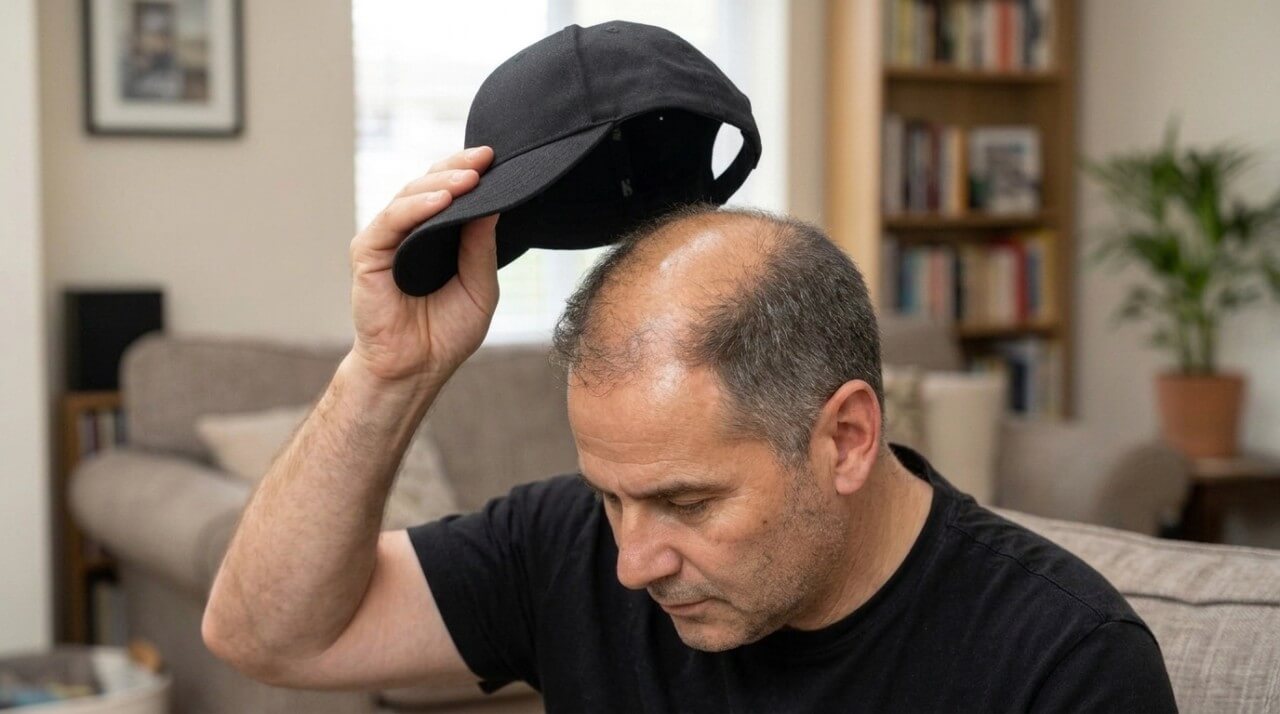
Many hair myths rely on similarly convincing logic, but the research on hats produced an unexpected result.
Wearing an ordinary hat does not appear to cause male-pattern baldness. In fact, a 2013 study of identical twins found that men who wore hats daily had less hair loss at their temples. The researchers did not establish that hats protect hair, and the evidence came from a small comparison. Very tight headwear can still contribute to hair damage under certain conditions.
The original study deserves a closer look, particularly because its most surprising result involved fewer participants than the headline suggests.
In this article
Researchers Studied 92 Identical Twins

In May 2013, researchers led by James Gatherwright published a study of identical twins in Plastic and Reconstructive Surgery.
They recruited 92 male twins between 2009 and 2011 at the Twins Days Festival in Twinsburg, Ohio. Participants ranged from 23 to 84 years old, with an average age of approximately 51.
Each participant completed a questionnaire about lifestyle habits. Researchers also collected standardized photographs and examined hair loss at the forehead, temples, and crown.
Two independent observers assessed hair thinning without access to the participants’ questionnaire responses. The researchers also compared measurements between genetically identical brothers.
The twin design was useful because the brothers shared essentially the same genetic makeup. Differences in their habits could help researchers identify possible environmental associations.
One result stood out: daily hat use was associated with less hair loss at the temples (p = 0.050).
The Hat Result Came From Only Eight Participants
View this post on Instagram
The original published paper provides an important detail about how the researchers reached that conclusion.
The entire study included 92 men, but the comparison involving regular hat use reported data for only eight twins. The statistical result also sat exactly at the conventional significance threshold of p = 0.05.
The researchers examined numerous lifestyle factors. Some were associated with greater hair loss, and others with less. With so many comparisons and a small hat-related sample, an isolated association deserves caution.
The study also relied on reported habits. Researchers did not randomly assign participants to wear hats for years, then measure the effect on their hairlines.
A protective effect remains unproven. Still, the study offers no support for the idea that ordinary hats cause baldness.
A Tight Hat Can Cause a Different Kind of Hair Loss
There is an important exception to the reassuring results.
The American Academy of Dermatology explains that repeated tension on hair follicles can cause traction alopecia. The condition can develop when hair remains under constant tension, particularly near the hairline.
A comfortable baseball cap generally does not create that kind of pressure. Problems become more plausible when headwear repeatedly rubs or pulls the hair, especially over a tight ponytail or braids.
Consider someone who wears a tight cap over a pulled-back hairstyle throughout every workday. Persistent tension may damage the affected hair follicles. Early changes can improve once the source of tension disappears, but prolonged damage can become permanent.
Why Hairlines Recede Even Without Hats
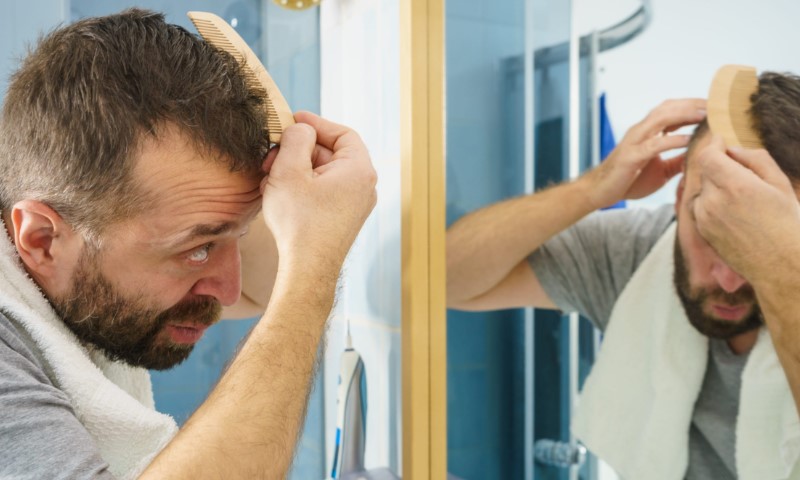
For most men with gradual hairline recession, genetics and hormonal sensitivity provide a more plausible explanation.
According to Cleveland Clinic, male-pattern baldness develops partly because certain follicles are genetically sensitive to dihydrotestosterone, or DHT.
Over time, susceptible follicles become smaller and produce progressively finer hairs. The process can begin at the temples or crown.
A cap cannot change that inherited sensitivity.
There is another reason people blame their hats. The American Academy of Dermatology explains that normal daily hair loss ranges from approximately 50 to 100 strands.
Finding several hairs inside a cap does not automatically indicate abnormal hair loss. A receding hairline or visible thinning over time provides more useful evidence of a problem.
Should You Stop Wearing a Hat?

If your cap fits comfortably, there is no established reason to stop wearing it to prevent baldness. A few simple precautions can help protect your hair and scalp:
- Choose a comfortable fit that does not pull your hair.
- Avoid tight hairstyles beneath your cap.
- Replace or wash headwear if sweat and residue irritate your scalp.
Persistent scalp discomfort or hair loss concentrated where headwear applies pressure deserves a dermatologist’s attention. A gradually receding hairline may require a different assessment, particularly when hereditary hair loss is suspected.
The eight twins behind that unexpected result are worth remembering. Their data cannot prove that hats preserve hair, but they offer a useful reason to question a warning that has survived for generations.
If your favorite cap fits well, you can keep wearing it. And if your temples are gradually losing hair, the cap is probably the wrong place to look for an explanation.