Does Reading in the Dark Damage Your Eyes? What Actually Happens When You Strain to See

You probably heard the warning as a child: turn on the light or you'll ruin your eyesight. Perhaps you read under the covers with a flashlight or spent an evening with a book beside a dim bedside lamp. After a few pages, your eyes felt tired, which made the warning sound reasonable.
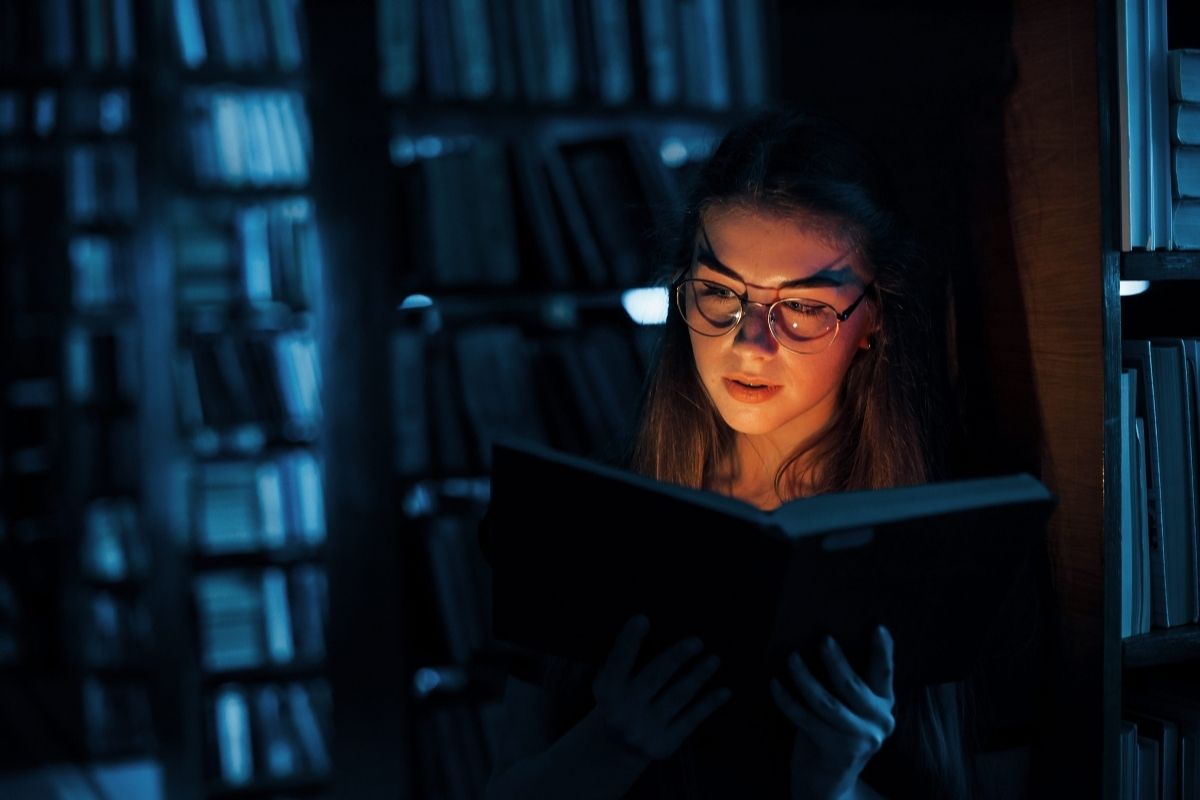
Reading in the dark does not cause permanent eye damage. The Canadian Association of Optometrists confirms that poor light can cause temporary eye strain. Your vision may become blurry or uncomfortable, but the symptoms generally fade after rest. Research into childhood nearsightedness adds some nuance to the familiar advice.
In this article
What Happens to Your Eyes in Low Light?
Imagine someone turns off the main light while you’re halfway through a chapter. You can still see the words, although the smaller letters become harder to distinguish.
Your pupils widen to let more light reach the retina. Two types of photoreceptors help process the image. Cones provide detailed vision under brighter conditions, while rods are more sensitive to low light and provide less detail.
Your eyes also adjust their focus through a process called accommodation. The ciliary muscle changes the shape of the lens so nearby objects appear clear. If you bring the book closer to your face, the eyes must accommodate more.
Pupil dilation is a normal response to darkness. It does not injure your eyes.
Why Do Your Eyes Hurt After Reading in Dim Light?
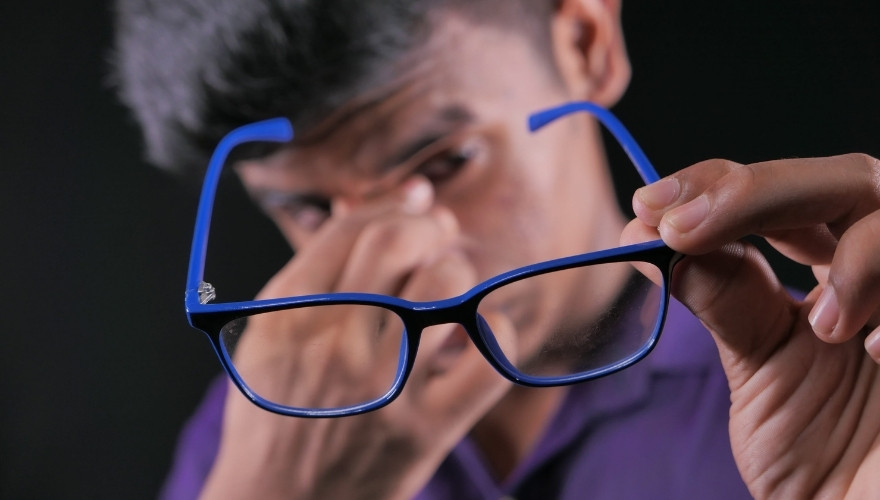
Eye strain can produce soreness, temporary blurred vision or headaches. Poor illumination makes small letters harder to distinguish, especially during a long session.
Blink frequency can also decrease during concentrated near work. Tears then evaporate more readily, sometimes causing dry eyes and irritation. Readers who already have dry-eye symptoms may notice the discomfort sooner.
The old warning likely survived because people could feel the discomfort themselves. A temporary symptom seemed like proof of lasting damage. Similar assumptions help explain why people believe shaving makes hair thicker, even though the change is mainly how the cut hair feels.
A 2022 Study Found a Link to Nearsightedness
The question becomes more complicated when children are involved.
A 2022 study of 1,400 schoolchildren in northern India found that 487 participants had myopia, or nearsightedness. Reading under dim light was associated with a higher prevalence of the condition.
Researchers reported a statistically significant relationship, with a p-value of 0.0006 for their comparison of dim-light habits.
However, the researchers examined existing habits. They did not assign children to different light conditions and observe their eyesight over several years. The results therefore cannot establish that poor illumination caused myopia.
A separate 2018 study involving 80 children used wearable sensors to measure daily light exposure. Researchers also found associations between dim-light exposure and myopia.
Genetics plays an established role in nearsightedness. The National Eye Institute also reports a lower risk among children who spend more time outdoors.
For parents, good desk illumination and regular outdoor activities remain sensible habits.
How Much Does Reading Distance Affect Eye Strain?
When letters become difficult to see, some readers instinctively move the book closer. That changes how much accommodation the eye needs.
The optical demand can be calculated by dividing one by the distance in meters.
Estimated accommodation at common reading distances
| Distance | Optical demand | Compared with 20 inches |
| 10 inches (25 cm) | 4.0 diopters | Twice as much |
| 16 inches (40 cm) | 2.5 diopters | 25% higher |
| 20 inches (50 cm) | 2.0 diopters | Baseline |
Source: Calculated using the optical relationship described in the clinical overview of accommodation. Values assume an eye without refractive error.
Greater optical demand does not establish eye damage. If a book feels uncomfortable at close range, increase the font size or improve the light before moving it closer.
Is Reading on Your Phone in a Dark Room Different?
A phone provides its own illumination, so the screen remains readable in complete darkness. However, a bright display against a dark background can feel uncomfortable.
Long sessions may also reduce blink frequency and contribute to temporary dryness. Adjust the screen brightness to suit the room, and consider a small bedside lamp.
What does using your phone in the dark mean for your eyes and overall health? In the video below, Dr. Sudhir Kumar, a neurologist at Apollo Hospitals, discusses the effects of using mobile phones in low-light conditions.
Four Ways to Make Evening Reading More Comfortable
A few adjustments can reduce unnecessary discomfort:
- Use a directional lamp. Illuminate the page evenly and avoid direct glare.
- Take short breaks. Follow the 20-20-20 rule: every 20 minutes, look at something 20 feet away for 20 seconds.
- Increase text size. Larger print can make close-up work more comfortable.
- Blink regularly. If dryness persists, ask an eye doctor about suitable lubricating drops.
Recurring headaches or blurry vision during ordinary reading deserve an eye examination. Sudden vision loss or new flashes accompanied by numerous floaters warrant urgent medical care.
You Can Keep Reading, Even With the Lights Low
A few chapters under a dim lamp won’t permanently damage healthy eyes. Temporary fatigue explains much of the discomfort behind the childhood warning.
Children’s long-term light exposure remains an active research topic, especially in relation to myopia. For ordinary evening reading, the advice is straightforward: use enough light to see comfortably, and give your eyes a break when they feel tired.