Does Going Outside With Wet Hair Make You Sick? What Science Says About Cold Weather and Catching a Cold

You wash your hair before work, glance at the clock, and realize there is no time for the blow-dryer. The moment you head for the door, someone warns that going outside with wet hair will give you a cold. Many people grew up with the same warning, especially during winter.

Wet hair does not cause the common cold. Respiratory viruses cause the infection, and there is no convincing evidence that a short trip outdoors with damp hair makes you more likely to catch one. Wet hair can make you lose heat faster, however, and cold air may affect some of the nose’s defenses against viruses.
In this article
Why Wet Hair Makes Cold Weather Feel Worse

Water needs energy to evaporate, and some of that energy comes from your hair and scalp. As moisture evaporates, you lose heat. Wind can speed up the process, making a short walk with wet hair feel colder than the same walk after blow-drying.
Your body normally regulates its core temperature during brief exposure to chilly weather. Feeling cold around your scalp does not mean your immune system has failed. Wet hair by itself cannot introduce a respiratory virus into your body.
Extended exposure is another matter. Cold-weather safety guidance explains why moisture and wind can increase heat loss. Soaked clothing poses a greater concern than damp hair alone. If you are facing freezing temperatures or strong winds, drying your hair is a reasonable safety measure.
What Scientists Found About Cold Air and the Nose
An experiment published in 2022 examined how nasal cells defend against respiratory viruses. Cells in the nose release tiny particles called extracellular vesicles. Some help interfere with viruses before infection takes hold.
When researchers lowered the temperature of nasal cell samples from 98.6°F to 89.6°F (37°C to 32°C), the release of those particles fell by about 42%. The team also measured how chilly air changed temperatures inside volunteers’ noses.
The laboratory findings offer a possible explanation for weaker local antiviral defenses in colder conditions. They did not measure infection rates among people who went outdoors with wet hair. Cold exposure alone cannot produce a cold without a virus.
But what does science actually say about the connection between wet hair and catching a cold? This short video takes a closer look at the popular belief and explains what really happens when you go outside with wet hair.
Why Colds Are Common in Winter

People tend to spend more time indoors during cold months, often close to others. Poor ventilation can allow infectious respiratory particles to accumulate in shared spaces. The common cold can be caused by more than 200 respiratory viruses, with rhinoviruses among the most frequent.
Consider a child who leaves for school on Monday with damp hair and starts coughing on Wednesday. A parent may remember Monday’s chilly walk. Yet the child could have encountered a virus at school or during the weekend. Symptoms appearing after an event do not prove that event caused the illness.
The belief has lasted because the two experiences often occur close together. People feel especially cold with wet hair, then notice a respiratory infection days later. The actual exposure to a virus is much harder to identify. The role of cold air in respiratory infections is more complicated than a single morning without a hair dryer.
Can Wet Hair Cause Other Problems?
In freezing weather, water on your hair can turn to ice. Frozen strands become stiff, and rough handling may increase breakage. Hair is also more vulnerable to mechanical damage when wet, so rubbing it aggressively with a towel is a poor idea.
A damp scalp may feel uncomfortable, particularly if you already have a scalp condition. A brief walk with wet hair has not been shown to cause a fungal scalp infection. Such infections have specific causes unrelated to an ordinary trip outside.
A hat may reduce heat loss during a cold commute, although it offers no special protection against cold viruses. If you expect to be outside for hours, drying your hair and dressing for the weather are sensible choices.
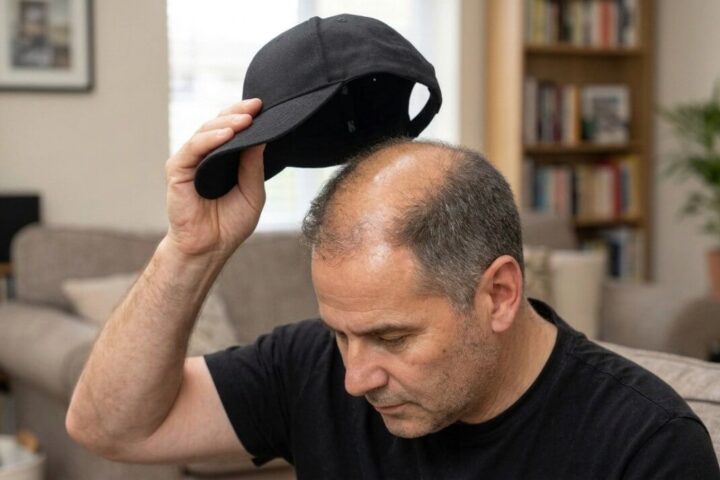
If you’re concerned about wearing a hat regularly, you may also wonder whether it contributes to hair loss.
What Actually Helps Reduce Your Risk of a Cold?

Handwashing helps reduce transmission through contaminated hands and surfaces. Better indoor ventilation can lower exposure to virus-containing particles. When someone at home is ill, limiting close contact can also reduce opportunities for infection.
A person with perfectly dry hair can still catch a cold after exposure to an infected person. Someone who often goes outside with wet hair may stay healthy throughout the season. Exposure to viruses is central to the risk of infection.
Wet hair is just one of several common cold-weather misconceptions. Explore other familiar beliefs in our article on cold myths.
Should You Dry Your Hair Before Leaving?
Dry your hair if you will be outdoors in freezing weather or if a damp scalp makes you uncomfortable. You may also want to avoid frozen strands during a long winter walk.
For a short trip outside, wet hair alone is no reason to fear a cold. The old warning was a reasonable response to the discomfort of chilly, damp hair. The science points to viruses as the cause of respiratory infection.