
Can You Sweat Out a Cold? A Sauna Won’t Shorten It, but a Light Workout Is Usually Fine

The advice usually comes with a towel. Sit in a hot sauna, get a good sweat, and let the cold leave your body. Some people prefer an extra sweatshirt and a hard workout. If their clothes end up soaked, they take it as proof that the remedy worked. Apparently, a wet shirt is all the evidence they need.

You cannot sweat out a cold, and a sauna has no proven ability to shorten the infection. Sweat primarily regulates body temperature, and excessive heat can increase dehydration risk. Light physical activity is usually safe with mild symptoms and no fever. But should you exercise with a cold? The decision depends on your symptoms and overall health.
Scientists once asked 157 people with colds to sit in a sauna at 194°F (90°C). They even made them wear winter coats. The reason behind those coats explains an important limitation of the research.
In this article
Sweat Is Mostly Water, Not an Exit for Viruses
Your body produces sweat to control its temperature. Evaporation helps release heat, particularly during exercise or exposure to a hot environment. According to Cleveland Clinic’s explanation, sweat produced by eccrine glands is approximately 99% water. The remainder contains electrolytes and small quantities of other substances.
Although sweat can contain traces of certain waste products, it has no established role in eliminating respiratory viruses. Your immune system must control the infection. Heavy perspiration can also reduce fluid levels and disturb electrolyte balance, especially if you already have a fever.
A soaked shirt therefore tells you very little about the progress of your cold. The amount of sweat you produce is a poor measure of recovery.
Why 157 People Wore Winter Coats in a Sauna
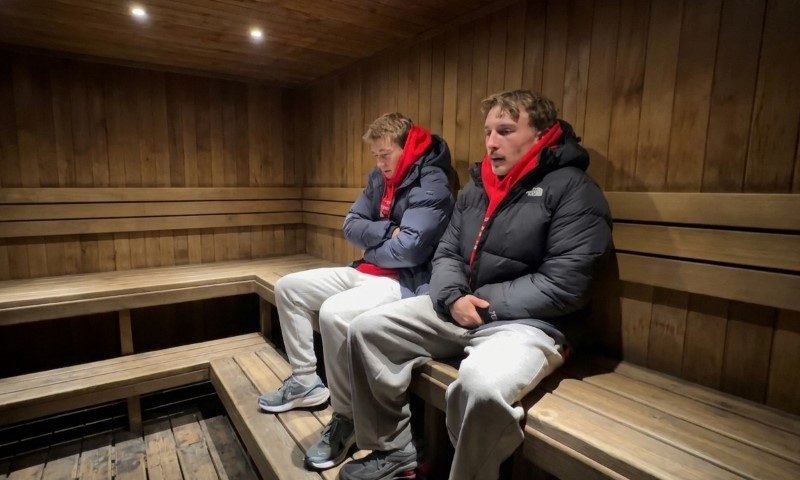
In 2010, researchers at Charité University Medical Center in Berlin published a randomized controlled trial in the Medical Journal of Australia. They recruited 157 adults with recent cold symptoms. Eighty participants inhaled hot, dry air inside a sauna, and another 77 inhaled room-temperature air through a special mask.
Both groups sat in a sauna heated to 194°F (90°C) for approximately three minutes on three consecutive days. Everyone wore a winter coat to limit body heat gain and perspiration. The researchers wanted to isolate the effects of hot air on respiratory symptoms. The coats helped separate inhaled air temperature from the substantial body heat exposure associated with an ordinary sauna session.
The researchers found no statistically significant difference in overall symptom severity across the seven-day observation period (p = 0.19). The trial primarily measured symptom scores. It did not directly test prolonged sauna sessions or establish that heat could reduce the duration of infection.
The coats deserve attention. Without that detail, the experiment sounds like a straightforward test of sauna therapy. The actual procedure was much narrower.
An Earlier Sauna Experiment Tested Prevention
A separate 1990 clinical trial followed 50 volunteers for six months. Twenty-five used a sauna regularly, and 25 served as controls. The sauna group experienced fewer colds, particularly during the final three months. However, the researchers found no significant difference in the average duration or severity of illness.
The study was small, and the authors called for further research. It also examined a different question from the 2010 trial.
The earlier experiment measured how often participants developed colds over several months. The later trial examined symptoms after an infection had already begun. A possible preventive effect cannot establish a treatment benefit for someone who is already sick.
Should You Exercise With a Cold? Check Your Symptoms First
The Mayo Clinic exercise guidance recommends a simple approach based on symptom severity. Mild symptoms above the neck, such as a runny nose or minor sore throat, generally permit light to moderate activity if you have no fever. Reduce your usual workout intensity and duration.
Exercise should wait if you have any of the following:
- Fever or substantial fatigue.
- Chest congestion or a severe cough.
- Widespread muscle aches or an upset stomach.
For a person accustomed to a three-mile run, a short walk may be a reasonable alternative during a mild cold. If unusual fatigue or dizziness develops, stop and rest. The goal is to remain comfortably active, without attempting to force perspiration.
People with heart or lung conditions may need additional caution, especially if respiratory symptoms affect their normal exercise tolerance.
Researchers Gave Volunteers Rhinovirus Before Exercise

A 1998 experiment at Ball State University provides a useful comparison. Researchers exposed 50 healthy adults aged 18 to 29 to rhinovirus type 16. Thirty-four participants completed supervised exercise, and 16 served as a nonexercise control group.
The exercise group completed 40-minute sessions every other day over ten days at 70% of heart rate reserve. Participants recorded symptoms twice daily, and researchers weighed used facial tissues as another measure of illness severity. The results showed no significant differences in symptom severity between the groups.
The researchers measured more than how participants felt. Tissue weight provided an additional indicator of nasal secretion, so the comparison did not depend entirely on personal symptom reports.
The study offers useful evidence for the decision about should you exercise with a cold. Exercise did not worsen the measured symptoms in those healthy young adults. It also did not accelerate recovery. The supervised conditions cannot represent everyone with a respiratory illness.
A Shared Sauna Is Another Reason to Stay Home
There is also the risk to other people. The CDC’s respiratory virus guidance recommends that people with symptoms stay home and avoid others until symptoms improve overall and they have been fever-free for at least 24 hours without fever-reducing medication. Additional precautions are recommended for the next five days.
A private walk away from other people differs substantially from a busy gym or shared sauna.
Saunas also expose the body to considerable heat. Cleveland Clinic advises caution, particularly because of dehydration and the cardiovascular demands of heat exposure. During a cold, prioritize fluids and rest. Seek medical care for difficulty with breathing or signs of dehydration. Persistent fever or symptoms that worsen after initial improvement also deserve medical assessment.
The winter-coat experiment is a useful reminder of how carefully scientists must control a familiar remedy before assessing its benefits. Those researchers separated hot air exposure from much of the body’s ordinary response to a sauna. Their results offered no convincing benefit for cold symptoms.
So should you exercise with a cold tomorrow? Let your symptoms decide. A gentle walk may be reasonable when you feel well enough, but the sauna can wait.
And if someone insists that a cold must be sweated out, there is no need to sacrifice another clean towel to test the claim.