
Does Alcohol Kill Brain Cells Heavy Drinking Harms Them in a Different Way

Someone wakes up after a night of too much alcohol and struggles to remember parts of the evening. Maybe they lost their balance, repeated the same conversation, or forgot how they got home. The old explanation sounds reasonable enough: alcohol must have killed some brain cells. But does alcohol kill brain cells every time someone has too much?
Alcohol does not simply destroy a predictable number of neurons with every drink. Heavy alcohol use can damage dendrites, the branches neurons use to receive signals, and interfere with the development of new nerve cells. Actual neuron loss can occur in severe alcohol-related conditions. Researchers at the University at Buffalo spent years examining the damage under microscopes, and their findings revealed a more complicated problem.
One detail deserves particular attention. A neuron can remain alive even after alcohol has damaged parts of the cell that help it communicate.
In this article
What Roberta Pentney Found in the Cerebellum
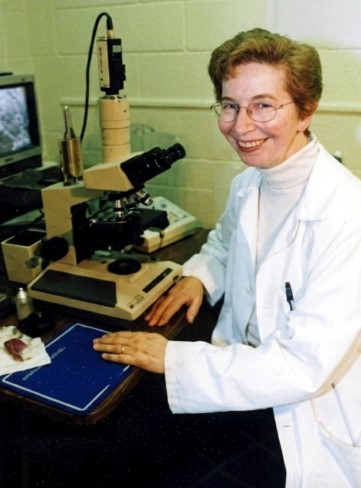
Roberta J. Pentney, an anatomy researcher at the University at Buffalo, studied Purkinje neurons in the cerebellum, a brain region essential for balance and movement coordination.
Purkinje cells have elaborate dendritic branches that receive information through thousands of connections. Damage to those branches can interfere with communication even if the cell body survives.
In a 1989 experiment published in Alcoholism: Clinical and Experimental Research, Pentney and her colleagues examined dendritic networks in older rats exposed to alcohol for 24 weeks.
Immediately after alcohol exposure ended, the researchers found no significant differences in the lengths of the dendritic segments they measured. Eight weeks later, however, an important difference appeared. Control animals showed growth in certain terminal branches, but alcohol-exposed animals did not show the same extension.
That result is particularly revealing. The researchers discovered a difference in how the neurons adapted after alcohol exposure, rather than simply counting dead cells.
The usual question, does alcohol kill brain cells, misses that distinction. Surviving neurons can have damaged connections that affect how effectively a neural network operates.
Forty Weeks of Alcohol Left Changes Inside the Neurons
Pentney and researcher Cynthia Dlugos continued to examine the cellular effects of alcohol.
In their 2000 study, published in Alcohol, they analyzed Purkinje neurons in 45 rats across three experimental groups. Thirty animals were examined after 40 weeks, and 15 underwent an additional 20-week recovery period.
The researchers found swelling in the smooth endoplasmic reticulum, a structure involved in calcium regulation inside cells. The changes appeared in the dendritic shafts of alcohol-exposed animals.
Calcium regulation matters because neurons depend on tightly controlled calcium levels for normal electrical and chemical communication.
After the recovery period without alcohol, the previously observed swelling was no longer present.
A later 2006 experiment involving 180 older male rats confirmed related changes after prolonged alcohol exposure. The researchers detected significant swelling in dendritic shafts after 40 weeks.
The contrast between the experiments is useful. Certain cellular abnormalities disappeared after alcohol withdrawal, but the earlier study also showed that some dendritic growth remained impaired during recovery.
Cellular recovery and complete restoration of neural connections are different outcomes. Neither experiment established that every damaged connection returned to normal.
Alcohol Can Also Reduce the Production of New Brain Cells
Existing neurons are only part of the story.
In 2002, Kimberly Nixon and Fulton Crews examined how intense alcohol exposure affected neurogenesis, the process associated with the formation of new neurons.
Their experiment in adult rats, published in the Journal of Neurochemistry, focused on the hippocampus, a brain region important for memory.
The researchers found that intense alcohol exposure reduced the proliferation of neural progenitor cells. A four-day high-dose exposure regimen also reduced the survival of newly generated cells.
Neural progenitors can develop into several types of nervous-system cells, including neurons. Fewer surviving progenitors can therefore affect the production of new nerve cells.
The experiment provides another answer to does alcohol kill brain cells. Alcohol can interfere with cellular development without researchers necessarily observing the immediate destruction of existing neurons.
The doses and conditions were experimental. Results in rats cannot establish the exact effect of a particular number of drinks on human neurogenesis.
Some Alcohol-Related Conditions Really Do Kill Neurons
There is an important exception to the popular explanation that alcohol only damages neural connections.
Wernicke-Korsakoff syndrome is a serious neurological condition associated with severe vitamin B1, or thiamine, deficiency. It occurs particularly among people with prolonged heavy alcohol use, although other forms of severe malnutrition can also cause it.
According to the National Institute on Alcohol Abuse and Alcoholism, the condition can cause profound memory impairment and potentially permanent brain damage.
A 1988 neuropathological study examined the brains of two patients with Korsakoff syndrome. Researchers documented marked neuronal loss in the medial mammillary bodies, structures involved in memory-related circuits.
The findings demonstrate actual neuron loss in a severe clinical condition. The damage is associated with thiamine deficiency and related disease processes, so it cannot be treated as evidence that an ordinary alcoholic drink directly kills the same cells.
Confusion, severe balance problems, or abnormal eye movements in someone at risk of thiamine deficiency require urgent medical attention. Early treatment can prevent additional damage.
Can the Brain Recover After Heavy Alcohol Use?
View this post on Instagram
A 2001 study provides useful human evidence.
Researchers Joseph O’Neill, Valerie Cardenas, and Dieter Meyerhoff used MRI and magnetic resonance spectroscopy to compare 12 people in recovery with eight people who continued to drink heavily.
Their 2001 research, published in Alcoholism: Clinical and Experimental Research, found greater frontal white matter volume and fewer white matter lesions in certain regions among the recovery group. Other brain regions showed persistent differences that suggested longer-term damage.
The study compared separate groups at one point in time. It could not track the recovery of individual neurons or prove that lost neurons had regenerated.
That limitation is especially important. An MRI can reveal changes in brain volume, but it cannot directly count newly restored neurons.
More recent NIAAA evidence indicates that some structural and functional changes improve over months of abstinence. The extent of recovery varies, and complete reversal remains uncertain.
People with prolonged heavy alcohol use should seek medical advice before abruptly stopping. Severe alcohol withdrawal can cause seizures and other life-threatening complications.
The Damage Matters Even When Neurons Survive
Taken together, the experiments show why the question does alcohol kill brain cells focuses too narrowly on cell death.
Pentney’s research showed that alcohol can alter the structure of dendrites. Other scientists found effects on the development of new cells. Severe thiamine deficiency can cause genuine neuronal loss.
A person does not need to lose a measurable number of neurons for alcohol to impair memory or coordination. The NIAAA explains that repeated excessive alcohol use can disrupt the brain circuits responsible for those functions.
The researchers at Buffalo spent years examining structures far smaller than anything visible on a brain scan. Their work offers a more useful lesson than the old warning about dead brain cells.
Keeping a neuron alive matters. Preserving its ability to work properly matters just as much.